Saving energy costs and emissions of heavy industries
Energy management
Improving nista’s user experience by supporting how teams actually work: exploring causes together, aligning on solutions, and managing energy issues through a clearer, more collaborative flow.


Project Details
Project Type
B2B, SaaS
Role
Product Designer (Sole Designer)
Date
2024-04-01
Company
nista.io
How does nista work?
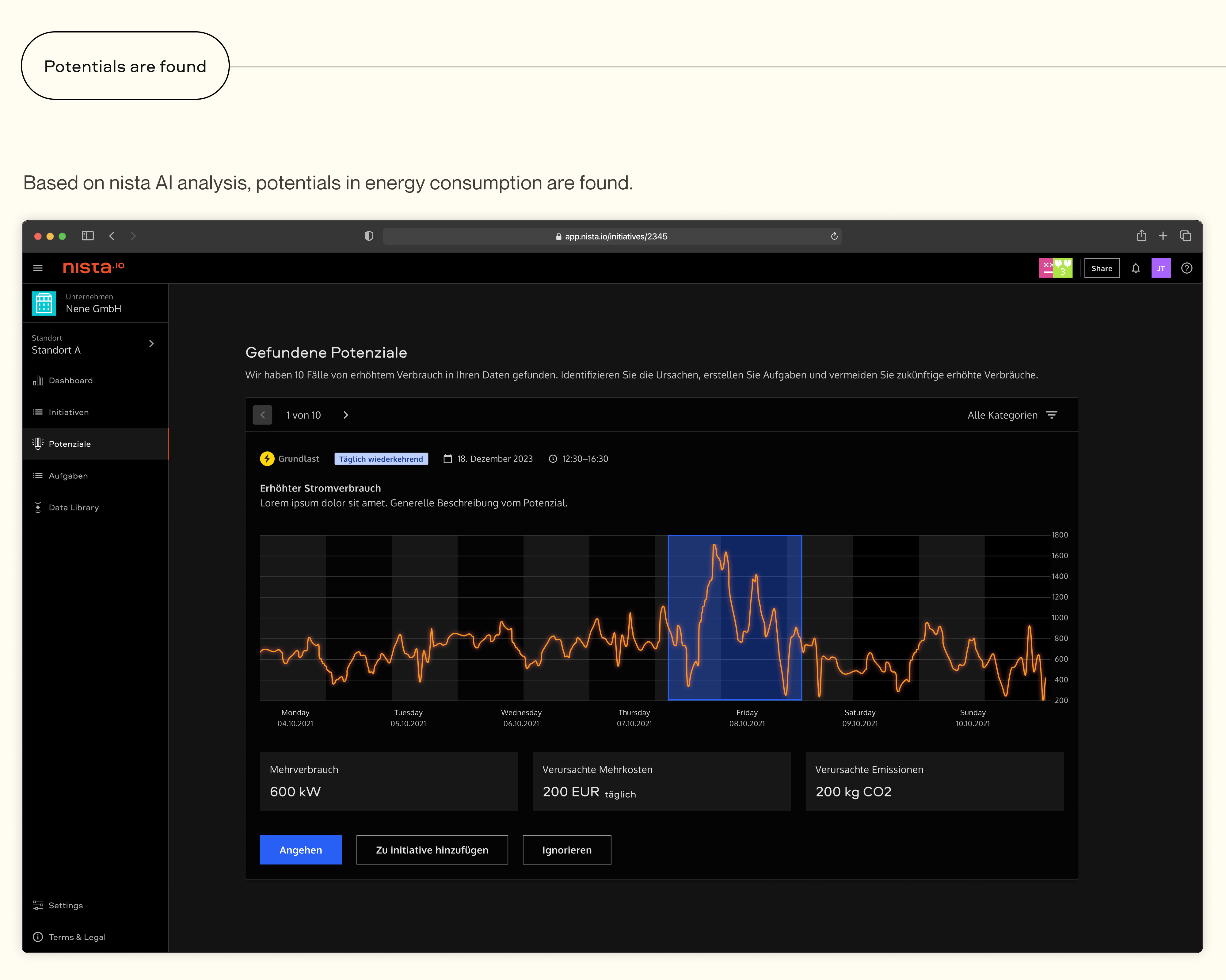
nista continuously analyses energy consumption data of heavy industries. Based on historical data, nista can recognise anomalies — potentials in energy consumption. Reasons for heightened energy consumption can vary from human error, such as not turning off a machine on time or leaving the lights on during night to inefficiencies of machines or wrong settings. nista empowers users to prevent heightened energy consumption by firstly bringing it to its users attention and encouraging them to take action.
Analysis to Task: Why it failed
When a potential is found in the data, users struggle to create a task that addresses the heightened energy consumption. Users tend to describe why a spike in consumption occurred and are reluctant to create a task that prevents the spike from happening again.
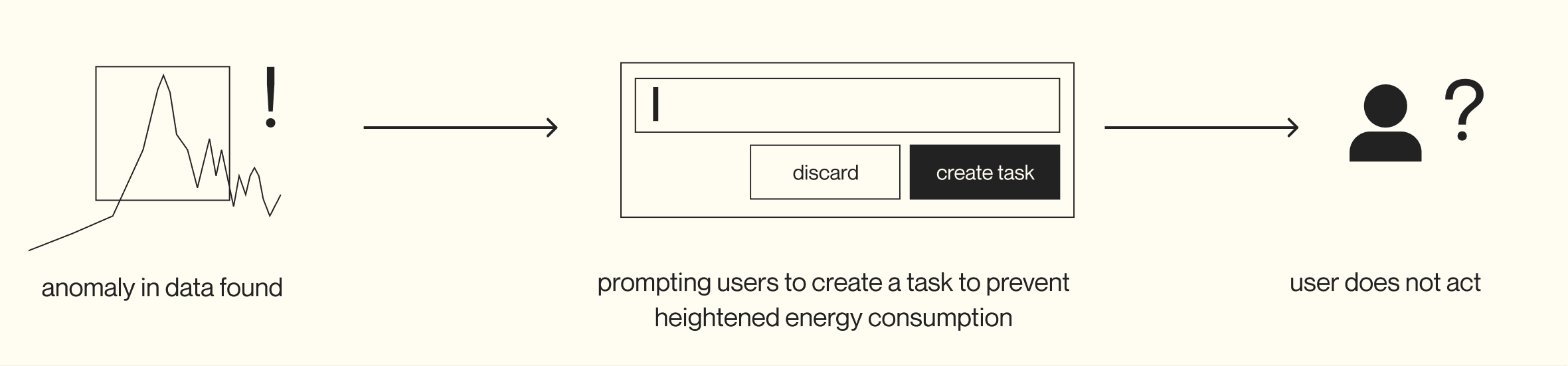
Problem statement
nista has very close contact with its customers. Based on interviews and observation of their internal processes, we were able to identify the problem:
“When a potential (anomaly in energy consumption data) is found, it is difficult to immediately identify the causes and determine a solution. Therefore, it is often not possible to define a task that addresses the excess consumption straight away.
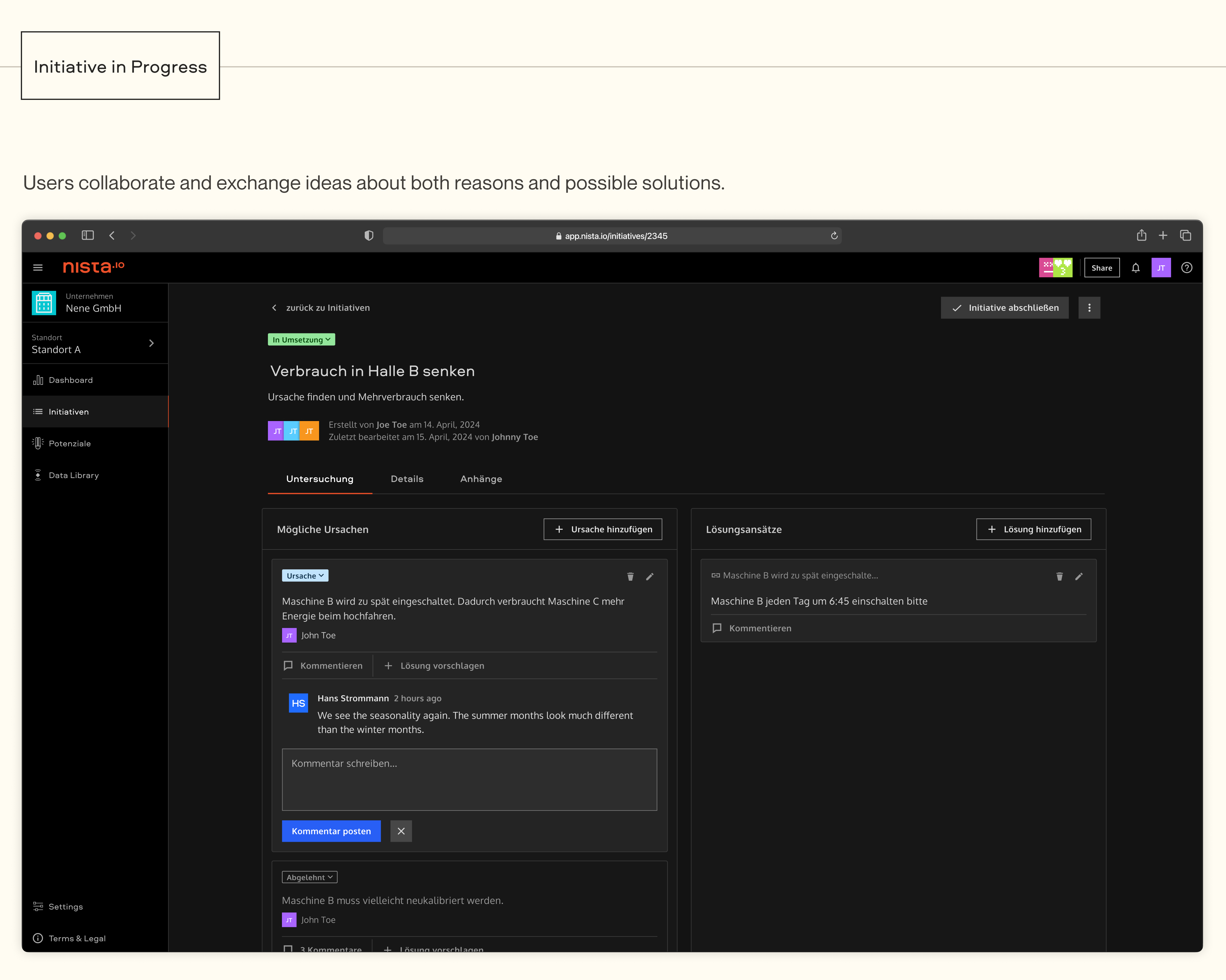
It takes longer to resolve a potential. People communicate with each other, exchange ideas about the causes and approaches. We want to enable this workflow in nista.“
Goal
“We want to enable users to collect ideas about possible causes of heightened energy consumption, suggestions and solutions in nista. We are providing them with a workflow that is close to their own and inspired by our customers.“
Design process
I led a workshop in which the nista team shared their knowledge, identified pain points and problems with the current workflow. Based on this workshop, I was able to define a problem statement and a goal.
The workshop and discussion with other internal stakeholders also gave me more insights into our customers, their processes and behaviours. I was able to define initial requirements and create first lo-fi wireframes. After these designs were tested, high fidelity designs were created and handed over to the development team.
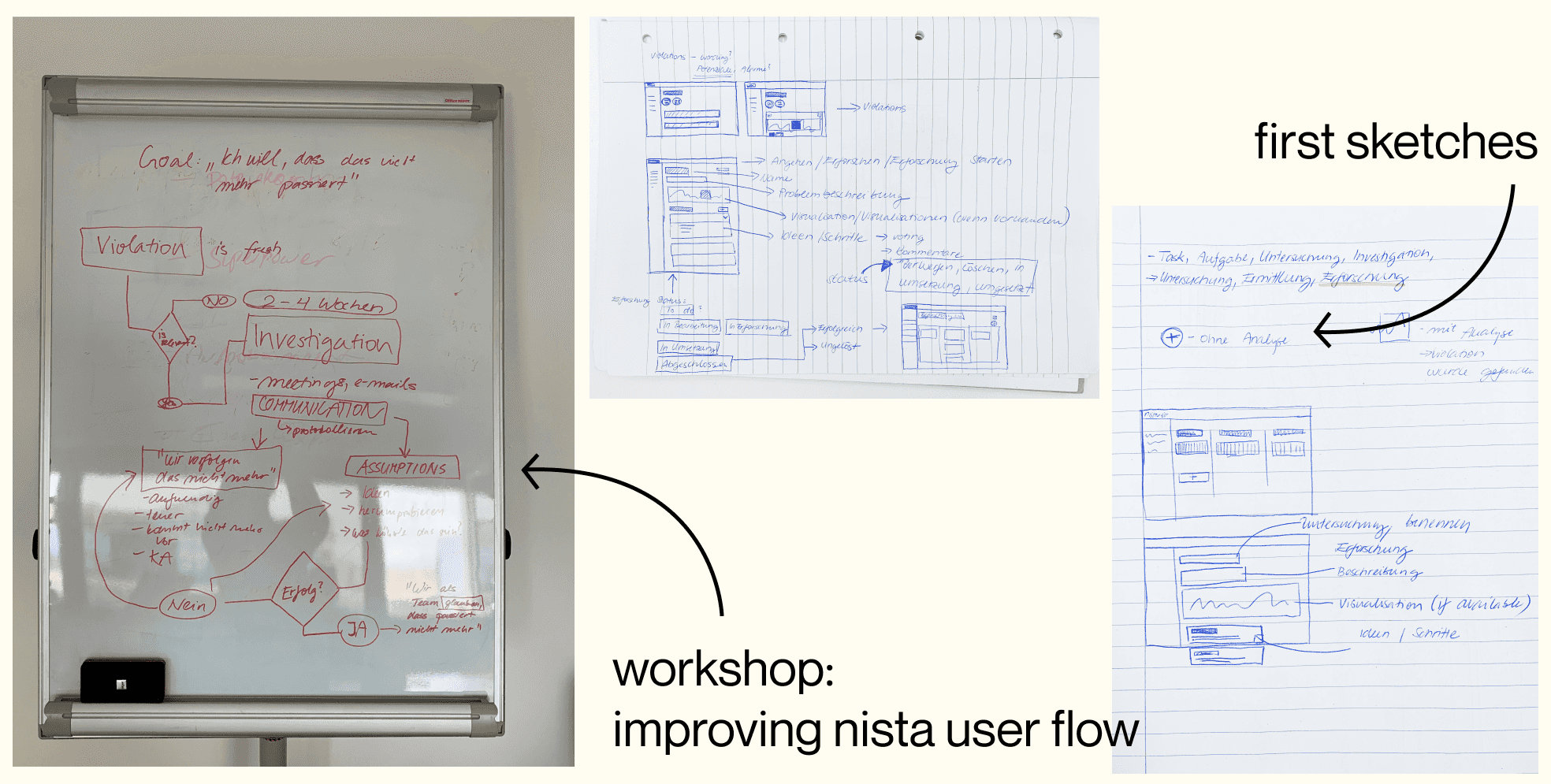
Improving the user flow
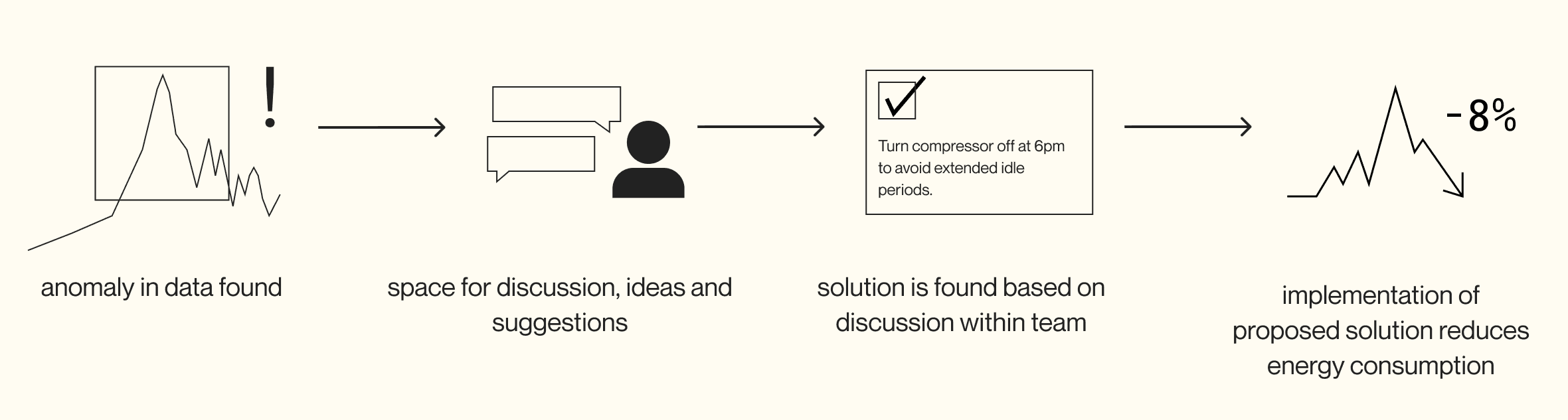
Based on observations and conversations with our users, we realised that our main flow was missing an entire process — the communication between employees when a team is trying to solve a problem. Addressing a potential issue (such as increased energy consumption) is, in many cases, not as straightforward as we previously assumed. Even though users were often able to come up with possible reasons for an energy consumption spike, they were hesitant to decide on one cause and create a solution right away. Therefore, possible causes and solutions need to be collected and discussed among multiple employees first.
The flow should look more like this:
Introducing initiatives
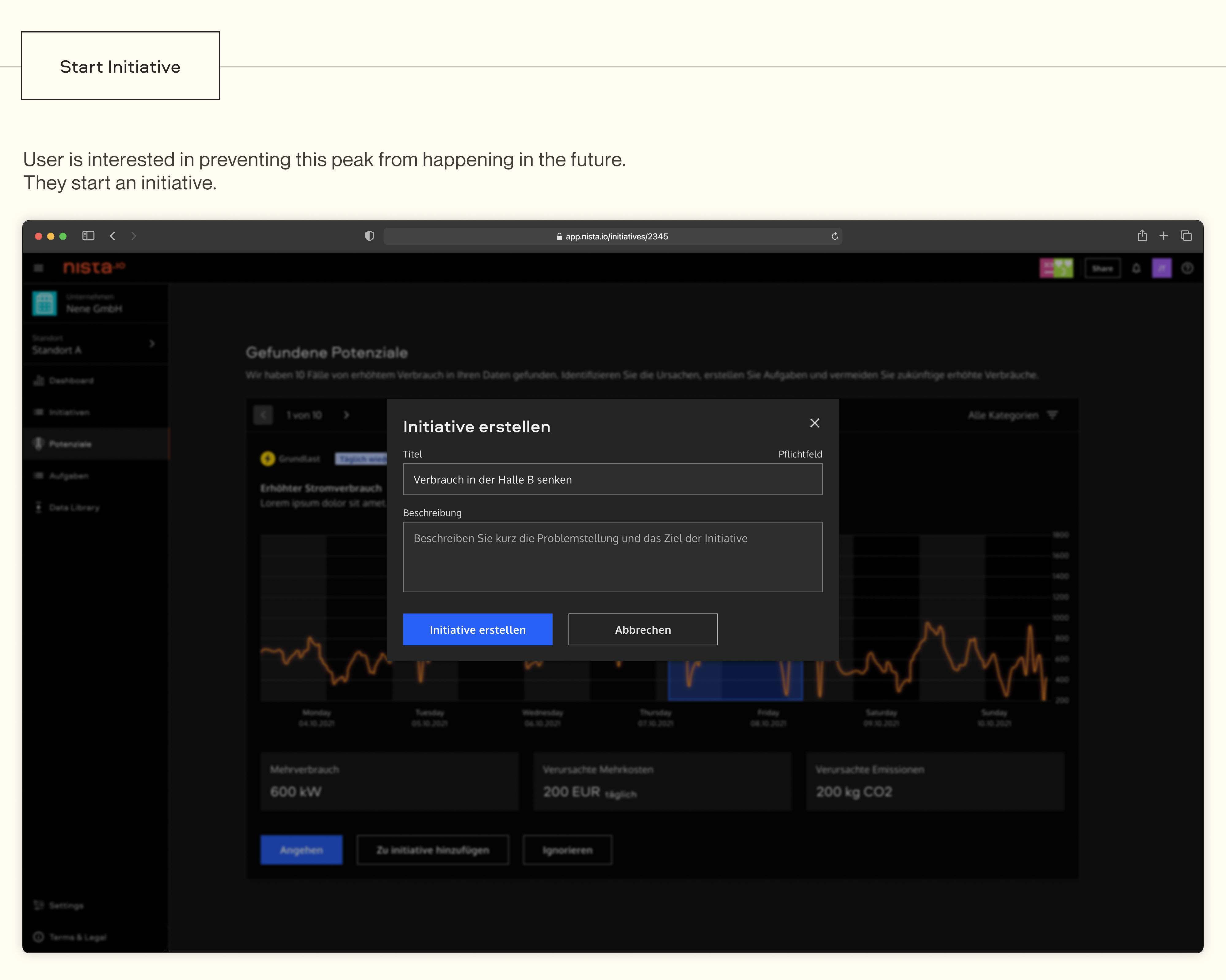
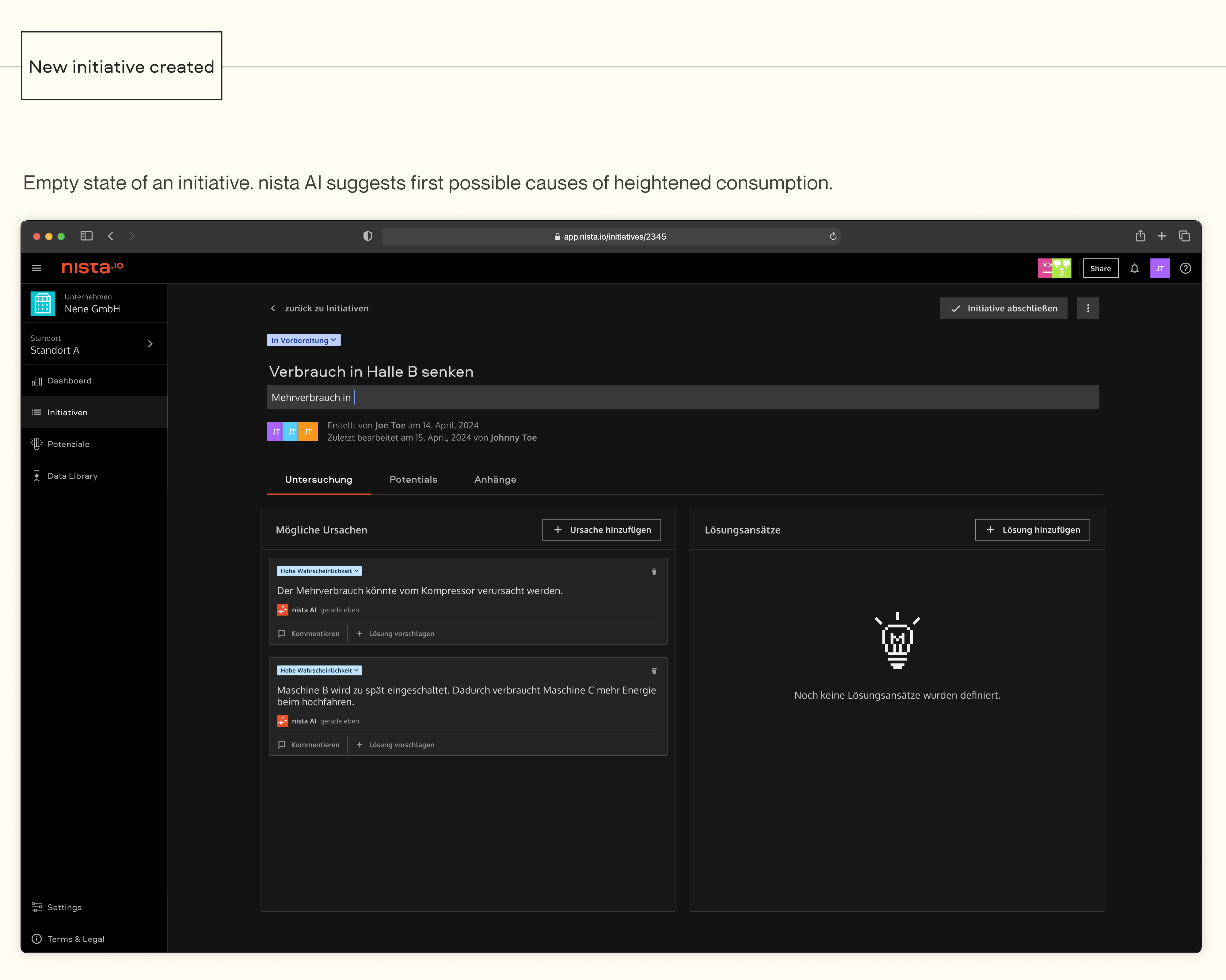
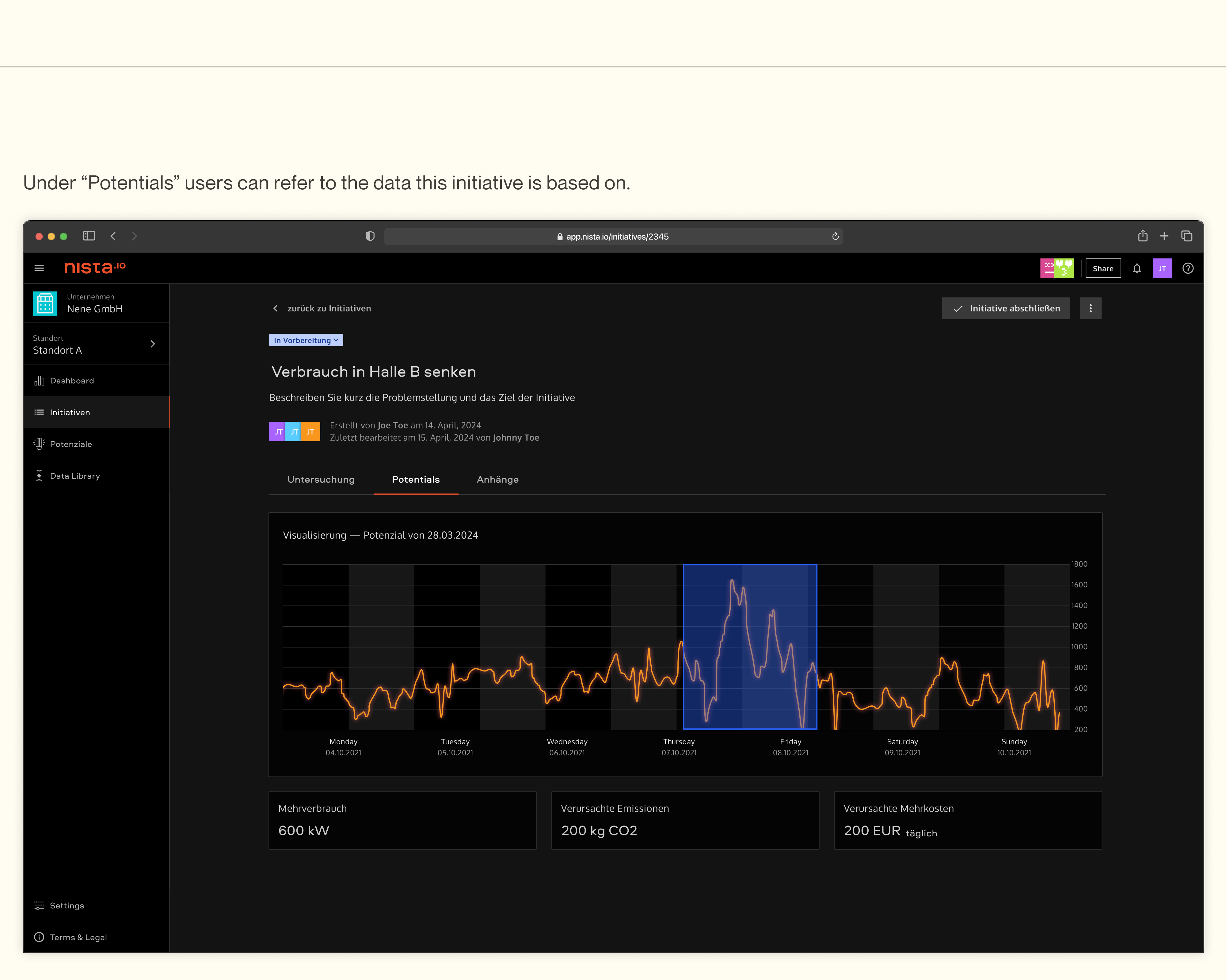
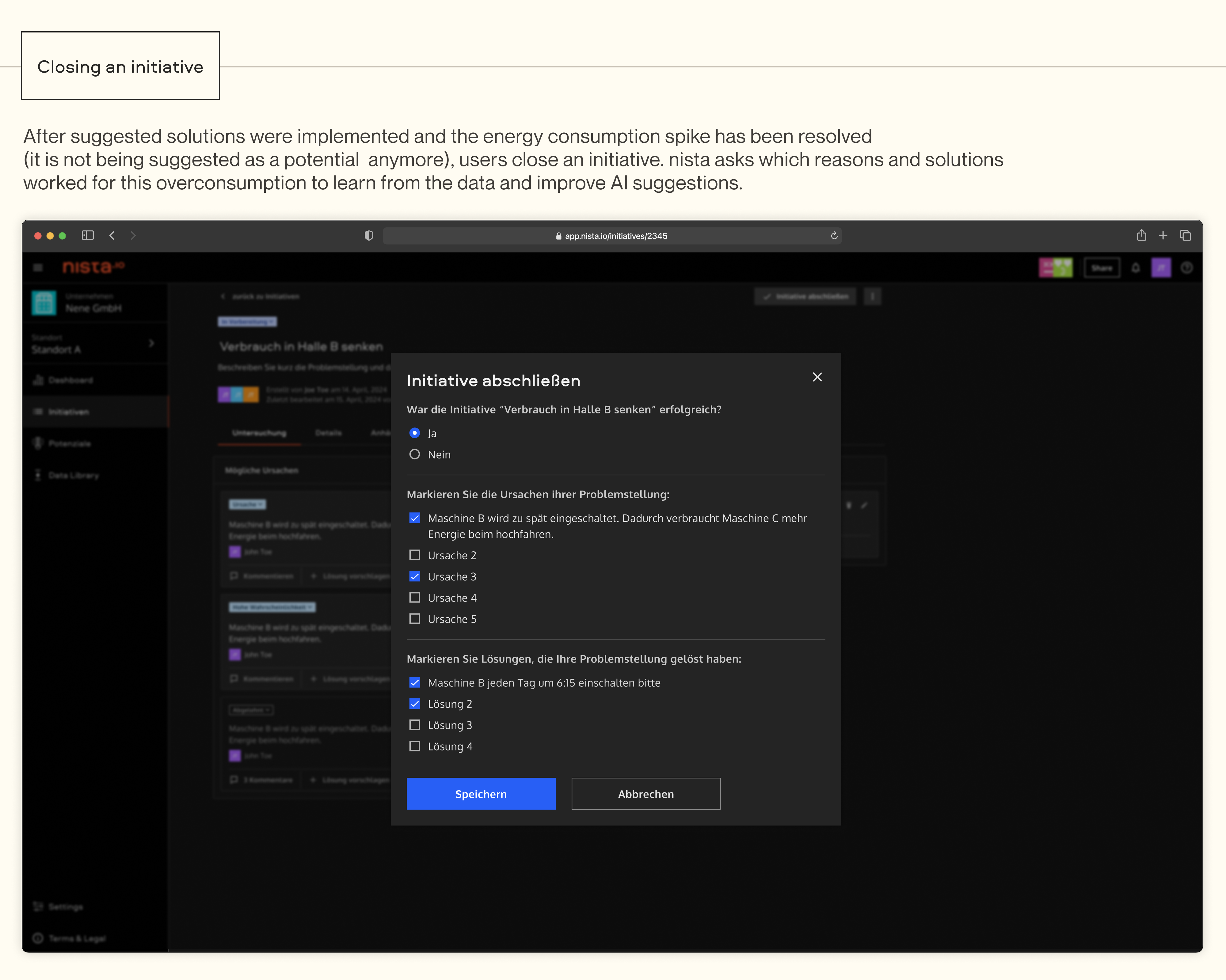
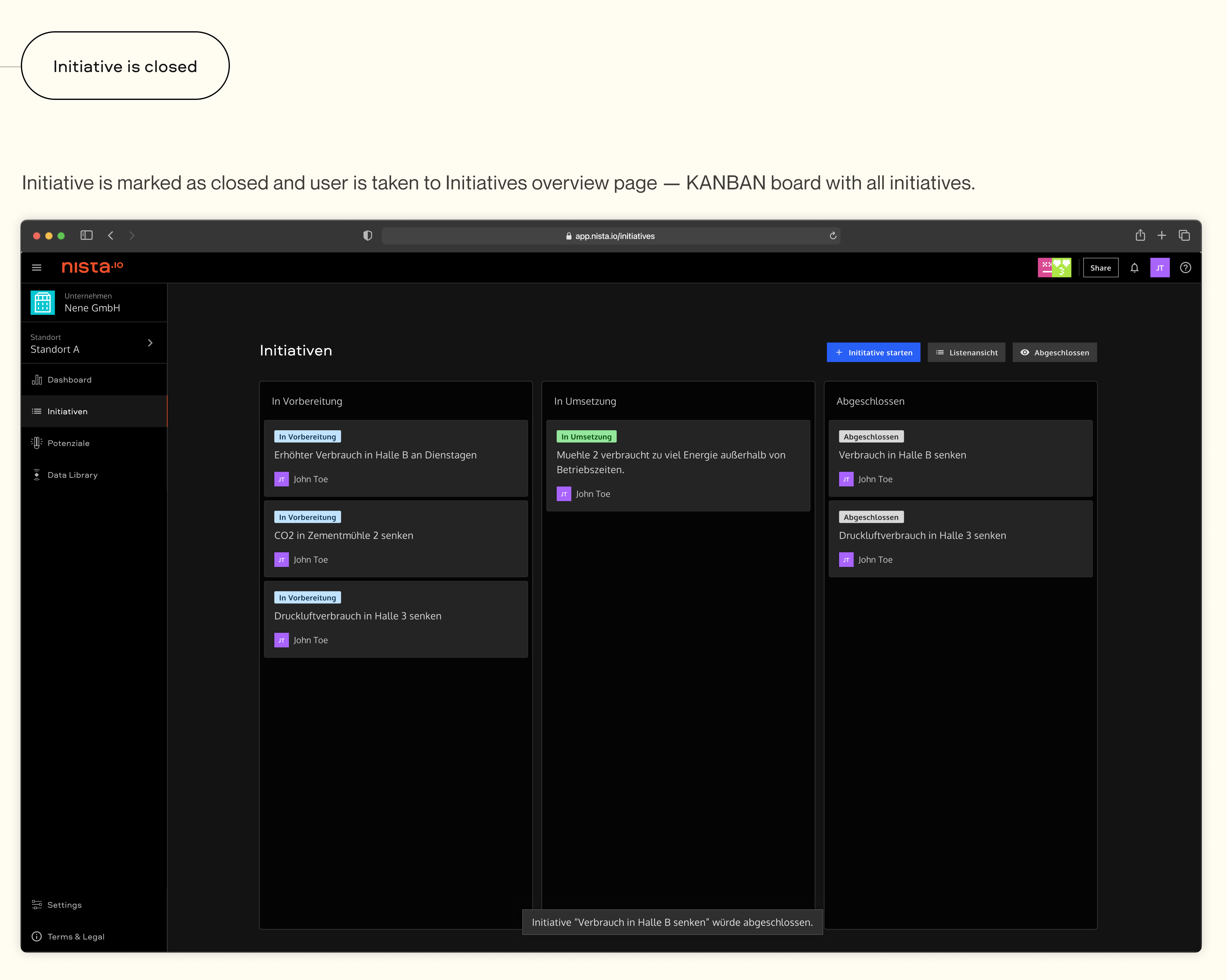
To allow users to collect possible causes and solutions and discuss them, we introduced Initiatives. Instead of creating a task from a potential, users create an initiative. An initiative is a process — users can collect their ideas, suggestions, and assumptions about possible causes and solutions, and discuss them with their colleagues. When an initiative is created, nista AI already suggests possible causes of the energy spike. Users can add additional causes based on their experience and create corresponding solutions. After they implement the solutions they agreed on, the initiative can be closed. Users are asked to mark the underlying causes and solutions for the heightened energy consumption — nista AI uses this data to improve its suggestions.
Outcome
By breaking down the process from identifying a potential to creating an immediate task into a more granular flow, we encouraged users to think more about underlying causes and supported them in developing solutions to potentials (heightened energy consumption).
Users also reported greater satisfaction with this refined process to our customer success team, and we were able to see the first initiatives being created and used in practice.
Opportunities & Future Development
We aim to continue to refine current user flow by incorporating user feedback. Insights from users will help identify root causes and effective solutions, which can then be used to train AI models that provide more helpful assistance in the future.